

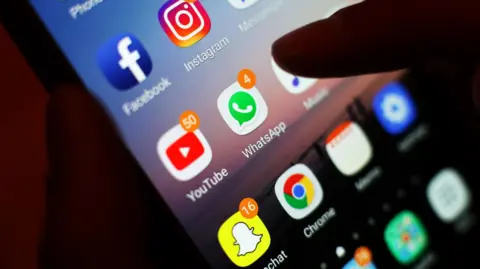
Apple could be required to allow rivals to operate their own app stores on Apple devices across Britain, after a ruling from the market watchdog.
This represents a major shift to the company's infamous "walled garden" where apps can only be downloaded from its own official marketplace.
But the Competition and Markets Authority has classified both Apple and Google as having "strategic market status" - effectively saying they have significant control over smartphone ecosystems.
Watchdog Assessment
The CMA said the tech firms "could be restricting progress and market rivalry".
But the authority clarified it did not "find or assume wrongdoing" from the firms.
"The app economy generates 1.5% of the UK's GDP and supports around 400,000 jobs, which is why it's crucial these markets work well for business," commented a senior official from the competition authority.
Around 90-100% of British smartphones operate using Apple or Google's operating systems, creating what the authority calls an "virtual monopoly".
According to current data, 48.5% of British smartphone users use an Apple device - which runs Apple's iOS - with the vast majority of the rest using Google's Android.
The Company's Response
The CMA's investigation focused on how prominent Apple and Google's own apps are versus rivals - as well as their web applications and operating systems.
It is unknown what modifications the regulator will look to request, but earlier it published roadmaps detailing potential measures it could take.
These comprise requiring it to be more straightforward for people to switch between iOS and Android phones, and for both firms to rank apps "fairly and openly" in their marketplaces.
The Cupertino company specifically may be compelled to permit third-party marketplaces on its products, and let people to install apps straight from companies' websites.
This would follow a similar ruling in the European Union, which previously imposed measures against Apple for restrictive practices.
The technology firm warned the United Kingdom could lose access to getting new features - as has occurred in the EU - which the company blames on strict rules.
For example, some Apple Intelligence capabilities which have been launched in other parts of the world are not available in the European market.
"Apple encounters fierce competition in every sector where we do business, and we work tirelessly to create the finest offerings, solutions and user experience," the organization said in a release.
"Britain's implementation of EU-style rules would weaken that, resulting in consumers with reduced data protection and security, slower availability to new features, and a fragmented, more complicated experience."
Google's Standpoint
Android users can currently use third-party app stores - though critics say they are not as user-friendly as the company's official Play Store.
The CMA's roadmap said the search company may have to "modify the interface" of installing applications directly from websites, as well as "eliminate barriers" when using third-party platforms.
"We simply do not see the rationale for today's designation decision," a company policy executive stated.
The representative said "most" of Google device owners use alternative app stores or install applications straight from a creator's site, and claimed there is a far greater range of apps offered for Android users versus those on iOS products.
"Currently available are twenty-four thousand Android phone models from 1,300 device makers worldwide, facing intense competition from Apple's platform in the United Kingdom," the spokesperson added.
Android is an open-source operating system, which means developers can use and build on top of it for no cost.
The company argues this means it opens up competition.
But consumer groups said curbs on these firms' dominance in other countries "currently assist enterprises to develop and giving customers more options".
"Their dominance is now creating genuine problems by limiting options for consumers and competition for businesses," stated a policy expert.


